SEO Tips & Strategies

Quick summary: A website usually fails to generate leads for three reasons: nearby buyers can’t find it, the traffic it does get has no intent to buy, or visitors don’t trust it enough to make contact. Local SEO fixes all three by connecting your Google Business Profile, website, reviews and content to the searches people make when they are ready to hire someone in their area. The result is fewer wasted clicks and more calls, bookings and inquiries.
You invested in a good-looking website. It loads, it has your logo, your services are listed. And yet the phone stays quiet and the contact form collects mostly spam.
You’re not alone. It’s one of the most common problems we hear from business owners, and the fix is rarely “a new website.” More often, the site is simply invisible to the people most likely to buy.
Traffic and leads are not the same thing. A thousand visitors from the wrong country, or people researching instead of buying, won’t fill your calendar. Fifty visitors who searched “emergency plumber near me” might.
Here are the warning signs that your website has a visibility or intent problem, not a design problem:
If two or more of these sound familiar, local search is likely where your leads are leaking.
Local SEO optimization is the process of making your business visible in search results when people nearby look for the products or services you offer. It covers your Google Business Profile, location-focused pages on your website, customer reviews, consistent business listings across the web, and content that answers the questions local buyers actually ask.
Standard SEO asks, “How do we rank for this topic?” Local SEO asks a sharper question: “How do we show up for the person who needs this service, in this area, right now?”
Google is fairly open about this. According to its own guidance on improving local ranking, local results mainly depend on three factors:
You can’t move your office closer to every customer. But relevance and prominence are fully within your control, and that is where most businesses fall short.
The map results at the top of a local search capture a large share of clicks, calls and direction requests. If your Google Business Profile is unverified, incomplete or listed under the wrong category, you are handing those leads to competitors. A properly structured profile, backed by professional Google Business Profile optimization, is often the fastest win available to a local business.
Ranking for “what is interior design” might bring visitors, but ranking for “interior designer in [your city]” brings clients. Many sites chase broad, informational keywords and wonder why nobody converts. Local SEO shifts focus to service-plus-location searches and conversational queries like “who’s the best accountant near me for small businesses?”
Reviews now do much of the persuading before a prospect ever reaches your website. BrightLocal’s Local Consumer Review Survey 2026 found that 97% of consumers read reviews before choosing a local business, and 31% will only consider a business rated 4.5 stars or higher.
A thin, outdated review profile doesn’t just lose you rankings. It loses you the customer who already found you.
Some websites attract the right visitors and still lose them. Common culprits include slow mobile load times, no click-to-call button, hidden contact details and service pages that never mention where you work. A good web development service builds for conversion, not just appearance: clear calls to action, fast pages, and location signals Google can read.
If your address, phone number or business name differs between your website, Google profile, Facebook page and directory listings, search engines lose confidence in which version is correct. Inconsistent details quietly suppress your local rankings.
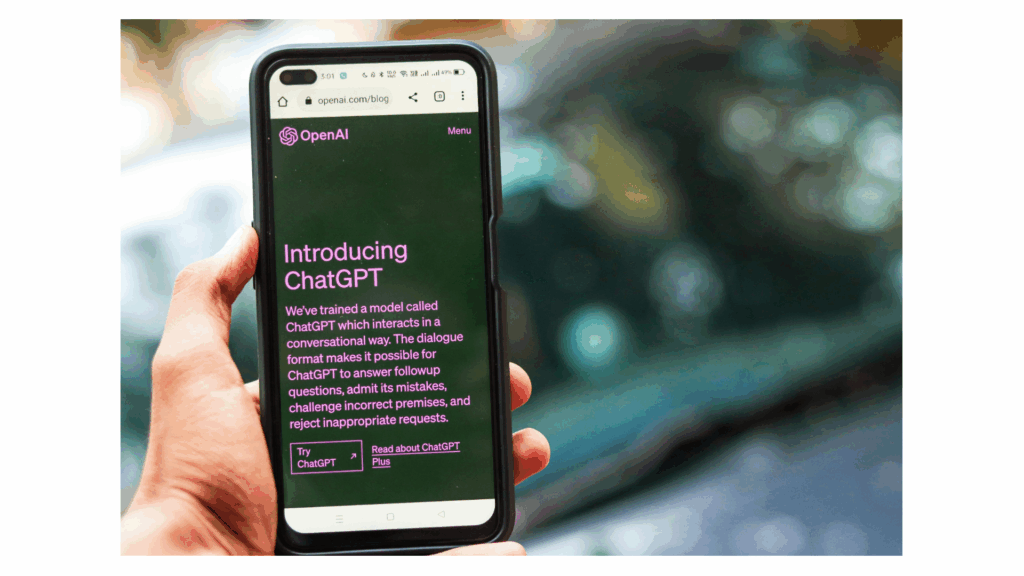
This is the newest and fastest-moving problem. Buyers increasingly ask ChatGPT, Gemini or Google’s AI Overviews for recommendations instead of scrolling through links. The same BrightLocal research shows how quickly habits have shifted:
| Where consumers look for local business recommendations | 2025 | 2026 |
|---|---|---|
| 83% | 71% | |
| AI tools (e.g. ChatGPT) | 6% | 45% |
AI assistants lean on the same trust signals as local SEO: accurate listings, strong reviews, clear service descriptions and brand mentions across reputable sites. If those signals are weak, AI tools simply won’t recommend you.
Here’s the framework we use with clients, simplified so you can see how the pieces connect:
Done together, these steps increase website traffic with SEO that actually converts, rather than inflating visitor numbers that never pick up the phone.
Some of this is manageable in-house. A small business can claim its Google profile, ask for reviews and fix listing errors without outside help. The harder parts are strategy, technical fixes, content at scale and staying ahead of AI search changes.
| DIY | Working with a specialist | |
|---|---|---|
| Google Business Profile setup | ✅ Manageable | ✅ Faster and more complete |
| Technical and on-page fixes | ⚠️ Often missed | ✅ Handled properly |
| Content and location pages | ⚠️ Time-consuming | ✅ Planned around real search data |
| AI search visibility | ❌ Hard to track | ✅ Built into the strategy |
| Lead tracking | ⚠️ Basic | ✅ Full reporting |
If your website is your main source of new business, a local SEO specialist usually pays for themselves in recovered leads. The key is choosing one who reports on inquiries and revenue, not just rankings.
At Rank Edge, local SEO is never treated in isolation. Our team brings over 12 years of search marketing experience, including more than seven years delivering results for Australian businesses, with offices in Colombo and Melbourne serving clients across Sri Lanka, Australia, New Zealand and beyond.
Our approach combines traditional ranking signals with AI-powered search optimization, so your business is visible in Google results, map listings and the AI assistants your buyers now use. [INSERT CLIENT RESULT, e.g. “One Melbourne service client grew monthly inquiries by X% within Y months.”]
Because we also handle web design, paid ads, social media and branding under one roof through our full-service digital marketing solutions, every piece of your online presence pulls in the same direction. For businesses ready to start, our SEO services cover everything from technical audits to local content and reporting.
“A website that gets found by the right people at the right moment doesn’t need to shout. It just needs to be there when they’re ready to buy.” The Rank Edge team
Your website is most likely attracting visitors without buying intent, or losing them because of weak trust signals. Focusing on local, service-specific searches, adding reviews and making contact options obvious usually closes the gap.
Start with a fully optimized Google Business Profile, then build dedicated pages for each service and location you cover. Consistent listings, steady reviews and helpful content that answers local questions all strengthen your visibility over time.
Quick wins, such as fixing your Google Business Profile, can show results within weeks. Stronger rankings and consistent lead flow typically build over three to six months, depending on competition in your area and industry.
Yes. AI assistants draw on similar trust signals to local search, including accurate business listings, reviews, brand mentions and clear service information. A solid local SEO foundation makes your business more likely to be recommended.
Not always. Many sites only need better service pages, faster load times and clearer calls to action. A rebuild makes sense when the site is slow, not mobile friendly, or impossible to update without a developer.
Ready to turn your website into a lead generator? Talk to the Rank Edge team about a local SEO strategy built around real inquiries, not vanity metrics.
Keep Reading
What Next
Tell us what you are trying to grow and we will tell you honestly whether we are the right people for it.