AI SEO Concepts
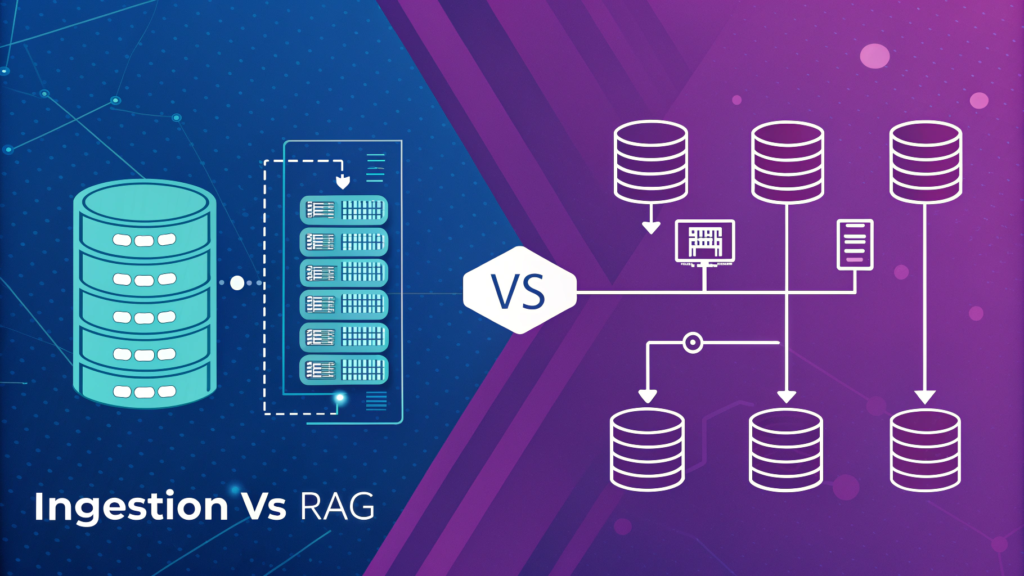
This article explores the fundamental differences between data ingestion and Retrieval-Augmented Generation (RAG) output in artificial intelligence systems. Data ingestion is the process of collecting, processing, and storing information that AI models can access, while RAG output represents the intelligent responses generated by combining retrieved data with language model capabilities. Understanding this workflow is essential for businesses implementing AI-powered search optimization and content strategies. The article covers the complete AI workflow, from initial data collection through final response generation, providing actionable insights for business owners and marketing managers seeking to leverage AI technology effectively.
When you ask an AI assistant a question and receive a remarkably accurate answer, two distinct processes work together behind the scenes. The first is data ingestion—the systematic collection and preparation of information. The second is RAG output—the intelligent generation of responses using that prepared data.
For businesses investing in AI-powered search optimization, understanding this workflow isn’t just technical curiosity. It’s the foundation for creating content that AI systems can effectively process and present to your target audience. At Rankedge AI, we’ve helped numerous international clients optimize their digital presence for both traditional search engines and emerging AI platforms, and the distinction between ingestion and output sits at the heart of this transformation.
Data ingestion represents the critical first phase where AI systems acquire and prepare information for future use. Think of it as the learning phase—the AI equivalent of reading thousands of textbooks before taking an exam.
Data ingestion involves several key steps that transform raw information into AI-ready knowledge:
Collection: AI systems gather data from multiple sources including websites, documents, databases, and structured content repositories. This process requires sophisticated crawling technology similar to how search engines discover web pages.
Preprocessing: Raw data undergoes cleaning and standardization. This includes removing duplicates, correcting formatting inconsistencies, and breaking large documents into manageable chunks.
Vectorization: Perhaps the most crucial step, information gets converted into numerical representations called embeddings or vectors. These mathematical representations allow AI systems to understand semantic meaning and relationships between different pieces of content.
Storage: Processed data gets stored in specialized databases called vector stores, where it can be efficiently searched and retrieved based on meaning rather than just keywords.
According to research published by leading AI institutions, the quality of data ingestion directly impacts the accuracy of AI-generated responses. Poor ingestion practices lead to hallucinations, outdated information, or irrelevant answers—outcomes that can damage business credibility.
When AI systems ingest your website content, they’re essentially creating a knowledge base about your business, products, and expertise. How AI reads your website content determines whether your business appears in AI-generated recommendations or gets overlooked entirely.
Consider these critical factors:
Retrieval-Augmented Generation (RAG) represents the output phase where AI systems generate intelligent responses by combining retrieved information with language model capabilities.
When someone queries an AI system, the RAG process unfolds in these stages:
Query Understanding: The system converts the user’s question into a vector representation, identifying the semantic intent behind the query.
Retrieval: The AI searches its vector database for the most relevant information chunks related to the query. This isn’t simple keyword matching—it’s semantic similarity search that understands meaning and context.
Ranking: Retrieved information gets ranked by relevance, ensuring the most applicable data influences the final response.
Generation: The language model synthesizes retrieved information into a coherent, contextual response that directly addresses the user’s question.
Citation and Grounding: Modern RAG systems often include source attribution, helping users verify information and building trust in the response.
Traditional search engines return a list of potentially relevant web pages, leaving users to find their answers. RAG output delivers direct answers synthesized from multiple sources, fundamentally changing how people interact with information.
This shift has profound implications for businesses. Your content needs to be structured not just to rank on search results pages, but to be selected and synthesized by AI systems generating answers. Creating an LLM-friendly content structure for your business website becomes essential for maintaining visibility in this new landscape.
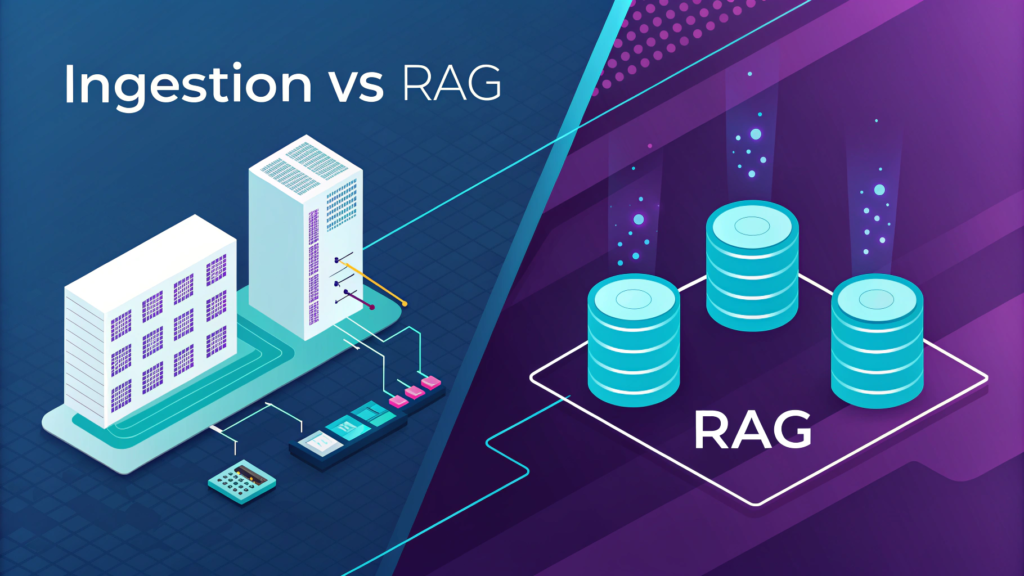
While ingestion and RAG output form a continuous workflow, they serve fundamentally different purposes and operate on different timescales.
Aspect |
Data Ingestion |
RAG Output |
Purpose
|
Collect, process, and store information
|
Generate intelligent responses to user queries
|
Timing
|
Periodic (daily, weekly, or on content updates)
|
Real-time (occurs with each user query)
|
Direction
|
One-way process (data flows into system)
|
Interactive (responds to specific user needs)
|
Computational Focus
|
Data processing accuracy and storage efficiency
|
Response speed, relevance, and coherence
|
Main Activities
|
Crawling, preprocessing, vectorization, storage
|
Query understanding, retrieval, ranking, generation
|
Quality Metrics
|
Coverage, accuracy, data freshness
|
Response relevance, factual accuracy, user satisfaction
|
Business Impact
|
Determines if content enters AI knowledge base
|
Determines if content gets cited in AI responses
|
Optimization Priority
|
Technical accessibility, content structure, metadata
|
Direct answers, topical authority, quotable statements
|
Time Investment
|
One-time setup with periodic maintenance
|
Continuous content refinement and updates
|
Visibility Outcome
|
Content becomes discoverable by AI systems
|
Content appears in AI-generated recommendations
|
This comparison table illustrates how both phases complement each other in the AI workflow. Neglecting either phase compromises your overall AI visibility strategy.
Timing: Ingestion happens periodically (daily, weekly, or when content updates), while RAG output occurs in real-time during each user query.
Direction: Ingestion is a one-way process (data flows into the system), whereas RAG output is interactive (responding to specific user needs).
Computational focus: Ingestion prioritizes accurate data processing and storage efficiency. RAG output prioritizes response speed, relevance, and coherence.
Quality metrics: Ingestion quality is measured by coverage, accuracy, and freshness of stored data. RAG output quality is measured by response relevance, factual accuracy, and user satisfaction.
Business impact: Ingestion determines whether your content enters the AI knowledge base at all. RAG output determines whether your content gets cited in responses.
Traditional SEO focused primarily on what we now understand as the ingestion phase—getting content crawled, indexed, and ranked. AI-powered search optimization requires excellence in both phases.
During ingestion, your content must be discovered, understood, and stored with proper context. During RAG output, it must be retrieved and presented as authoritative information worth citing.
Rankedge AI has developed proven methodologies that optimize for both phases simultaneously. Our clients have seen significant improvements in AI-generated recommendations by addressing both ingestion quality and output relevance in their content strategies.
Understanding how ingestion and RAG output connect provides actionable insights for content strategy.
Your content journey begins with creation. AI-optimized content includes clear structure, comprehensive coverage, authoritative tone, and semantic richness with related concepts.
AI systems discover your content through various mechanisms including direct API access, web crawling, and integration partnerships. The ingestion process evaluates content quality, extracts key information, creates vector embeddings, and stores processed data.
When users ask questions, AI systems convert queries to semantic representations, search vector databases for relevant content, and retrieve top-matching information chunks.
The AI synthesizes information from multiple sources, generates coherent natural language responses, attributes sources when appropriate, and delivers answers in conversational format.
Many AI systems refine their retrieval and generation based on user feedback, content performance, and emerging patterns, creating a continuous improvement loop.
Businesses that excel in AI visibility optimize for the entire workflow, not just individual components.
Implement structured data: Use schema markup to provide explicit context about your content, helping AI systems understand what information represents.
Create comprehensive content clusters: Develop topic clusters that cover subjects thoroughly from multiple angles, giving AI systems rich information to ingest.
Maintain content freshness: Regular updates signal relevance and ensure ingested data remains current and accurate.
Optimize technical performance: Fast-loading, accessible websites facilitate more efficient crawling and ingestion.
Answer questions directly: Structure content to directly address common queries, increasing the likelihood of being selected during retrieval.
Establish topical authority: Deep expertise on specific subjects increases trust signals that affect both retrieval ranking and citation decisions.
Use clear, quotable language: Concise, authoritative statements are more likely to be extracted and cited in AI-generated responses.
Build credible backlinks: External validation through quality backlinks influences how AI systems weight your content’s authority.
As a Google Partner with extensive experience in AI-powered optimization, Rankedge AI helps businesses implement these strategies systematically, ensuring visibility across traditional search and emerging AI platforms.
Understanding potential pitfalls helps businesses avoid costly mistakes in their AI optimization efforts.
Content fragmentation: Information scattered across many pages may not be ingested comprehensively, leading to incomplete knowledge representation.
Technical barriers: JavaScript-heavy sites, authentication walls, or slow loading times can prevent effective ingestion.
Outdated information: Stale content creates situations where AI systems provide outdated responses based on old ingested data.
Poor content structure: Unstructured content makes it difficult for AI systems to extract meaningful information during ingestion.
Retrieval accuracy: Even well-ingested content may not be retrieved if query understanding or semantic matching fails.
Context limitations: AI systems can only process limited amounts of retrieved information, meaning verbose content may be truncated.
Attribution ambiguity: When information comes from multiple sources, determining proper citation can be challenging.
Hallucination risks: Language models may generate plausible-sounding but incorrect information when retrieved data is insufficient.
Businesses need concrete metrics to evaluate their AI optimization efforts.
At Rankedge AI, we’ve developed proprietary tracking methodologies that help clients monitor these metrics and continuously refine their AI optimization strategies.
The landscape of AI-powered information retrieval continues evolving rapidly, with several emerging trends reshaping how businesses should approach content strategy.
Multi-modal ingestion: AI systems increasingly ingest not just text but images, videos, and audio, requiring businesses to optimize across content types.
Real-time ingestion: The gap between content publication and ingestion continues shrinking, with some systems offering near-instantaneous indexing.
Personalized RAG output: AI responses are becoming increasingly personalized based on user history, context, and preferences, requiring businesses to create content that serves diverse user segments.
Verification and fact-checking: Growing emphasis on response accuracy is driving more sophisticated validation during both ingestion and output phases.
Integration with enterprise systems: RAG workflows are extending beyond public internet content to include private business data, creating opportunities for proprietary knowledge utilization.
Understanding the distinction between data ingestion and RAG output provides a strategic framework for navigating AI-powered search optimization. Ingestion determines whether your content enters the AI knowledge ecosystem at all, while RAG output determines whether it gets surfaced as valuable, authoritative information.
Success in this new landscape requires a holistic approach that optimizes content for both phases of the workflow. Businesses must create technically accessible, semantically rich content that AI systems can effectively ingest, while simultaneously structuring that content to serve as authoritative source material during RAG output generation.
The transformation from traditional search to AI-powered information retrieval isn’t a distant future scenario—it’s happening now. Businesses that understand and optimize for the complete AI workflow position themselves for sustained visibility as user behavior continues shifting toward AI-assisted search and discovery.
For companies seeking expert guidance in this rapidly evolving landscape, partnering with specialists who understand both the technical intricacies and strategic implications of AI workflows makes the difference between visibility and obscurity in the age of intelligent search.
AI data ingestion is the process where artificial intelligence systems collect, process, and store information from various sources like websites and documents. RAG (Retrieval-Augmented Generation) output is the phase where AI systems generate intelligent responses by retrieving relevant information from their stored knowledge base and synthesizing it into coherent answers. Ingestion happens periodically to build the knowledge base, while RAG output occurs in real-time when users ask questions. Both processes are essential for AI systems to provide accurate, contextual responses.
The time required for AI ingestion varies depending on several factors including website size, technical accessibility, content structure, and the specific AI system performing the ingestion. Some advanced AI platforms can begin ingesting new content within hours of publication, while others may take several days or weeks. Factors that accelerate ingestion include having a clean site structure, implementing proper schema markup, maintaining fast loading speeds, and submitting updated sitemaps. Regular content updates and strong technical SEO foundations help ensure more frequent and comprehensive ingestion.
Can I optimize my content specifically for RAG output and AI-generated responses?
Yes, you can optimize content specifically for RAG output by implementing several strategic approaches. First, structure your content to directly answer common questions with clear, authoritative statements that AI systems can easily extract and cite. Second, build comprehensive topic coverage that establishes your website as a trusted authority in your field. Third, use structured data markup to provide explicit context about your content. Fourth, maintain content freshness with regular updates to ensure AI systems retrieve current information. Finally, create quotable, concise explanations of complex topics that work well when synthesized into AI-generated responses.
Why does my website content not appear in AI-generated search results?
If your website content isn’t appearing in AI-generated search results, several factors might be responsible. Common issues include poor technical accessibility that prevents effective ingestion, lack of topical authority or comprehensive coverage, outdated content that AI systems deprioritize, weak content structure making information extraction difficult, insufficient semantic richness with related concepts, or limited external validation through backlinks. Additionally, new websites may simply not have been ingested yet by AI systems. Addressing these issues through comprehensive AI optimization strategies typically improves visibility in AI-generated responses over time.
RAG output doesn’t replace traditional SEO but rather extends it into new dimensions. While traditional SEO focused on ranking in search result lists, RAG output optimization focuses on being selected and cited in AI-generated direct answers. This means businesses now need to optimize for both scenarios simultaneously. Key differences include creating more conversational, question-answering content rather than just keyword-targeted pages, building deeper topical authority rather than broad keyword coverage, implementing structured data more comprehensively, and establishing credibility through external validation. The fundamental principles of quality content, technical excellence, and user value remain constant, but their application evolves to serve both traditional search rankings and AI response generation.
About Rankedge AI: As a leading SEO agency specializing in AI-powered search optimization, Rankedge AI helps businesses navigate the evolving landscape of intelligent search systems. Our proven methodologies combine traditional SEO excellence with cutting-edge AI optimization strategies, ensuring our clients maintain visibility across both conventional search engines and emerging AI platforms. Contact us to learn how we can optimize your content for the complete AI workflow from ingestion through RAG output.
What Next
Tell us what you are trying to grow and we will tell you honestly whether we are the right people for it.