Quick Takeaways
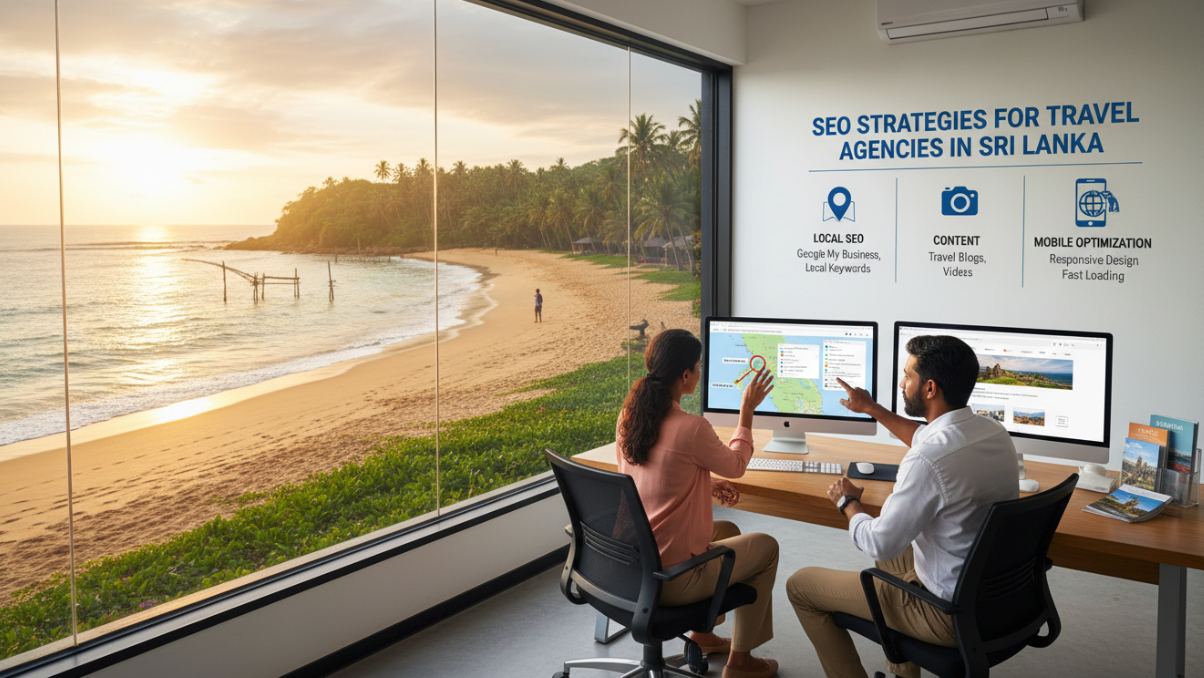
- Mobile-first optimization is non-negotiable: Over 76% of Sri Lankans browse on mobile, making responsive design and fast loading speeds critical for ranking
- Local + international targeting is essential: Sri Lanka welcomed 2.36 million tourists in 2025, with India (27%), Europe (51.3%), and Russia (11%) as top markets requiring multilingual SEO
- Content quality trumps quantity: Google’s 2026 E-E-A-T (Experience, Expertise, Authoritativeness, Trustworthiness) framework demands authentic, firsthand travel experiences
- Technical SEO foundations matter more than ever: Core Web Vitals, page speed under 3 seconds, and proper schema markup are mandatory for competitive rankings
- Long-tail keywords drive conversions: Target specific phrases like “private tours Sri Lanka 14 days” or “ayurveda wellness retreat Kandy” instead of generic terms
- Visual content enhances engagement: High-quality images with optimized alt text, virtual tours, and video content significantly boost dwell time and rankings
- Building authoritative backlinks requires strategy: Focus on tourism blogs, travel review sites, and partnerships with international travel platforms for quality links
Introduction: Why SEO Matters More Than Ever for Sri Lankan Travel Agencies
Sri Lanka’s tourism industry achieved a historic milestone in 2025, welcoming over 2.36 million visitors and generating $3.2 billion in revenue—a 15.1% year-on-year increase. But here’s the reality: if your travel agency doesn’t appear on the first page of Google search results, you’re invisible to the 90% of travelers who never scroll past page one.
The landscape of SEO for travel agencies in Sri Lanka has transformed dramatically. Google’s 2026 algorithm prioritizes user experience, authentic content, and technical excellence over traditional keyword stuffing. With increasing competition from international booking platforms like TripAdvisor, Booking.com, and Airbnb Experiences, local travel agencies must adopt sophisticated SEO strategies to capture both international tourists and domestic travelers.
This comprehensive guide reveals the exact strategies successful Sri Lankan travel agencies are using to dominate Google search results in 2026, attract high-value customers, and build sustainable online visibility.
Understanding the Sri Lankan Tourism Market in 2026
Current Tourism Landscape
Sri Lanka’s tourism sector has rebounded remarkably from past challenges. December 2025 recorded the highest monthly arrivals in history with 258,928 visitors. The breakdown reveals critical insights for your SEO strategy:
Top Source Markets:
- India: 531,511 visitors (27% of total arrivals)
- Europe: 51.3% of total arrivals
- Russia: 11% market share
- United Kingdom: Strong European presence
- Germany and China: Significant contributors
Travel Preferences Shaping SEO:
- Leisure tourism dominates (650,765 visits in 2024)
- Growing wellness tourism demand (yoga retreats, Ayurvedic treatments)
- Eco-tourism and sustainable travel trending upward
- MICE sector contributing 54,831 visits
- Average tourist stay: 8.4 nights
Understanding these demographics is crucial because your SEO strategy must target keywords and content that resonate with these specific traveler profiles.
Why Traditional Marketing Isn’t Enough
The modern traveler’s journey begins with a Google search—not a travel agency visit. Research shows that 76% of Sri Lankans use the internet, with mobile search dominating desktop usage. Before booking a tour to Sigiriya or a stay in Ella, potential customers:
- Search for destination information (“best time to visit Sri Lanka”)
- Compare tour operators (“Sri Lanka tour packages with driver”)
- Read reviews and testimonials
- Check pricing and availability
- Make booking decisions
If your agency doesn’t rank for these critical search queries, competitors will capture these customers first.
The Foundation: Technical SEO Essentials
Website Speed and Core Web Vitals
Google’s 2026 algorithm places unprecedented emphasis on Core Web Vitals—the technical metrics measuring user experience. Your website must meet these benchmarks:
Critical Metrics:
- Largest Contentful Paint (LCP): Under 2.5 seconds
- Interaction to Next Paint (INP): Under 200 milliseconds (new 2026 metric)
- Cumulative Layout Shift (CLS): Under 0.1
Sri Lankan travel agency websites frequently fail these tests due to heavy images, unoptimized code, and slow hosting. A slow website doesn’t just frustrate visitors—it directly impacts your Google rankings.
Actionable Steps:
- Use image compression tools to reduce photo file sizes without quality loss
- Implement lazy loading for images below the fold
- Enable browser caching
- Use a Content Delivery Network (CDN) for faster global loading
- Minimize JavaScript and CSS files
- Choose quality hosting providers with servers in Sri Lanka or Singapore
Real Example: Jetwing Hotels achieved global recognition partly through technical SEO excellence. Their website loads in under 2 seconds, with optimized images and clean code architecture, helping them win “Best Travel Website in the World” at the Travel Marketing Awards.
Mobile-First Optimization
With mobile devices accounting for the majority of searches, Google now uses your mobile site version for ranking decisions. Your website must be:
- Fully responsive across all device sizes
- Easy to navigate with thumb-friendly buttons
- Readable without zooming
- Fast-loading on 3G/4G connections
- Free from intrusive popups
Test your mobile experience by searching for your agency on a smartphone. Can visitors easily browse tours, view pricing, and contact you? If not, you’re losing both rankings and customers.
Schema Markup for Travel Websites
Schema markup is code that helps Google understand your content structure. For travel agencies, implementing proper schema can result in rich snippets—enhanced search results that increase click-through rates by up to 30%.
Essential Schema Types:
- Organization schema (agency details, contact info, social profiles)
- Local Business schema (address, phone, operating hours)
- Product schema (tour packages with pricing)
- Review schema (customer testimonials and ratings)
- Event schema (upcoming tours, seasonal packages)
- FAQ schema (common questions about tours)
When properly implemented, schema markup can help your tours appear in Google’s enhanced results, including:
- Star ratings displayed in search results
- Price information
- Availability status
- Location maps
- Booking buttons
HTTPS Security
Google requires HTTPS (secure connection) as a ranking factor. An SSL certificate encrypts user data, building trust with potential customers and improving rankings. If your website still uses HTTP, upgrading to HTTPS is mandatory—not optional.
Keyword Research: Finding What Travelers Actually Search
Long-Tail Keywords vs. Generic Terms
The biggest mistake Sri Lankan travel agencies make is targeting ultra-competitive generic keywords like “Sri Lanka tours” or “travel agency.” These broad terms:
- Have intense competition from international booking platforms
- Attract low-intent browsers rather than ready-to-book customers
- Rarely convert to actual bookings
Instead, focus on long-tail keywords—specific phrases that indicate booking intent:
High-Converting Long-Tail Keywords:
- “private tours Sri Lanka with driver 14 days”
- “luxury beach villas Mirissa with pool”
- “ayurveda wellness retreat Kandy authentic”
- “budget backpacking itinerary Sri Lanka 2 weeks”
- “family-friendly safari tours Yala National Park”
- “cultural heritage tour Anuradhapura Polonnaruwa”
- “honeymoon packages Sri Lanka 7 days romantic”
- “whale watching season Mirissa best time”
These longer phrases may have lower search volumes, but they convert at much higher rates because searchers have specific intent.
LSI Keywords and Semantic Search
Google’s 2026 algorithm uses AI to understand context and meaning, not just exact keyword matches. Latent Semantic Indexing (LSI) keywords are related terms that help Google understand your content topic.
Primary Keyword: “Sri Lanka tour packages”
LSI Keywords to Include Naturally:
- Ceylon travel experiences
- Island nation tours
- South Asian destinations
- Buddhist heritage sites
- Tropical paradise vacations
- Indian Ocean getaways
- Hill country excursions
- Coastal resort stays
- Wildlife safari adventures
- Tea plantation visits
Incorporate these naturally throughout your content—never force keywords unnaturally. Google’s AI detects keyword stuffing and penalizes such practices.
Keyword Research Tools for Sri Lankan Market
Free and paid tools to identify profitable keywords:
Free Tools:
- Google Keyword Planner
- Google Search Console
- Google Trends (track seasonal tourism patterns)
- Answer the Public (discover question-based queries)
Paid Tools:
- Ahrefs (comprehensive keyword research and competitor analysis)
- SEMrush (keyword difficulty and ranking tracking)
- Moz Keyword Explorer (SERP analysis)
Local Insight: Research keywords in multiple languages—English, Sinhala, and Tamil—to capture both international and local searches. Tools like Google Trends show that Sinhala searches for tourism services have increased year-over-year.
Competitor Keyword Analysis
Study the top-ranking travel agencies in Sri Lanka to identify keyword opportunities:
- Search for your target keywords in Google
- Analyze the top 10 results
- Identify common keywords and content patterns
- Find content gaps—topics competitors haven’t covered
- Create superior content addressing those gaps
Use tools like Ahrefs’ Site Explorer to see which keywords your competitors rank for, then create better, more comprehensive content targeting those same terms.
Content Strategy: Creating High-Value Travel Content
The E-E-A-T Framework for Travel Content
Google’s 2026 algorithm evaluates content through E-E-A-T:
Experience: Demonstrate firsthand knowledge of destinations
- Share actual photos from tours (not stock images)
- Include real customer testimonials with names and photos
- Describe personal experiences at locations
- Provide insider tips only locals know
Expertise: Prove your travel industry knowledge
- Showcase your team’s qualifications and experience
- Provide detailed itinerary planning
- Offer accurate, updated information about destinations
- Explain complex travel logistics clearly
Authoritativeness: Build industry recognition
- Earn mentions on reputable travel sites
- Secure partnerships with tourism boards
- Get featured in travel publications
- Accumulate positive reviews on Google, TripAdvisor
Trustworthiness: Establish reliability and transparency
- Display clear pricing without hidden fees
- Show genuine customer reviews (including some criticism)
- Provide secure booking processes
- Maintain consistent NAP (Name, Address, Phone) information
Blog Content That Ranks and Converts
Regular blog posting improves SEO by:
- Targeting additional long-tail keywords
- Demonstrating expertise and freshness
- Increasing indexed pages
- Providing shareable content for backlinks
High-Performing Blog Topics:
Destination Guides:
- “Complete Guide to Ella: Best Hikes, Cafes, and Accommodations”
- “Hidden Beaches in Southern Sri Lanka: Beyond Mirissa and Unawatuna”
- “Kandy Cultural Triangle: Temples, History, and Local Experiences”
Seasonal Content:
- “Best Time to Visit Sri Lanka: Month-by-Month Weather Guide”
- “Whale Watching Season Mirissa: When to See Blue Whales”
- “Sri Lanka Monsoon Travel: Where to Go During Rainy Season”
Practical Guides:
- “Sri Lanka Visa Requirements 2026: Complete Application Guide”
- “Budget Breakdown: How Much Does a 2-Week Sri Lanka Trip Cost?”
- “Sri Lanka Travel Safety: What Tourists Need to Know in 2026”
Experience-Based Content:
- “My Experience Climbing Adam’s Peak at Sunrise”
- “Local Food Guide: 15 Must-Try Sri Lankan Dishes and Where to Find Them”
- “Photography Guide: Best Spots in Sigiriya for Instagram-Worthy Shots”
Content Structure Best Practices:
- Use descriptive H2 and H3 headings with keywords
- Write in short paragraphs (3-4 sentences maximum)
- Include bullet points and numbered lists for readability
- Add high-quality, optimized images every 300-400 words
- Answer specific questions searchers ask
- Include internal links to relevant tour packages
- Add clear calls-to-action throughout
Visual Content Optimization
Travel is an inherently visual industry. Optimized visual content improves both user experience and SEO:
Image Optimization:
- Use descriptive file names: “sigiriya-rock-fortress-sunrise.jpg” instead of “IMG_1234.jpg”
- Write detailed alt text: “Tourists climbing ancient stairs at Sigiriya Rock Fortress during golden hour sunrise in Sri Lanka”
- Compress images to under 100KB when possible
- Use modern formats like WebP for better compression
- Include captions with keywords where natural
- Add location metadata to images
Video Content Strategy:
- Create virtual tour videos of destinations
- Film customer testimonials
- Develop “day in the life” content showing actual tours
- Host videos on YouTube with optimized titles and descriptions
- Embed videos on relevant website pages
- Add transcripts for accessibility and SEO
Google prioritizes websites with diverse, quality visual content because it enhances user engagement—a key ranking signal.
User-Generated Content
Encourage customers to create content about their experiences:
- Request photo submissions for your website
- Feature customer stories as blog posts
- Share social media posts (with permission)
- Create video testimonials
- Compile “customer favorite” destination lists
This authentic content demonstrates real experiences, satisfying Google’s E-E-A-T requirements while providing social proof to potential customers.
Local SEO: Dominating “Near Me” Searches
Google Business Profile Optimization
Your Google Business Profile (formerly Google My Business) is critical for local visibility. When tourists search “travel agency near me” or “tours in Colombo,” properly optimized profiles appear in the Local Pack—the map results at the top of search pages.
Optimization Checklist:
- Complete Every Section:
- Accurate business name, address, phone (NAP consistency)
- Detailed business description with keywords
- Correct business categories (primary: Travel Agency; secondary: Tour Operator, Tour Agency)
- Business hours including holidays
- Website URL
- Booking URL if different
- Visual Content:
- Upload minimum 10 high-quality photos
- Include exterior, interior, team, and tour photos
- Add new photos weekly
- Create virtual tours if possible
- Regular Updates:
- Post weekly updates about tours, offers, events
- Share blog articles
- Announce new packages
- Highlight seasonal promotions
- Review Management:
- Respond to ALL reviews within 24-48 hours
- Thank positive reviewers personally
- Address negative reviews professionally and constructively
- Request reviews from satisfied customers
- Q&A Section:
- Proactively add common questions and answers
- Monitor and respond to user questions
- Include keywords naturally in answers
Impact: AppLabx, a leading SEO agency in Sri Lanka, helped a boutique hotel in Galle rank first page for “best boutique hotels in Galle” and “Sri Lanka beach accommodation” through comprehensive Google Business Profile optimization combined with localized content.
Local Citations and Directories
Citations—mentions of your business name, address, and phone number across the web—strengthen local SEO. Focus on:
Tourism-Specific Directories:
- TripAdvisor
- Lonely Planet
- Viator
- GetYourGuide
- Google Travel
- Sri Lanka Tourism Development Authority (SLTDA) listings
General Business Directories:
- Yellow Pages Sri Lanka
- LankaBusinessPage
- WOW.lk
- Sri Lankan business directories
Consistency is critical: Ensure your NAP information is identical across all platforms. Inconsistent information confuses Google and weakens local rankings.
Location-Based Content
Create dedicated pages for each destination or region you serve:
- “Colombo City Tours with Expert Local Guides”
- “Ella Hill Country Adventures: Hiking, Trains, and Nature”
- “Galle Fort Walking Tours: History and Architecture”
- “Yala National Park Safari Packages: Wildlife Photography Tours”
Each location page should include:
- Detailed description of offerings
- Local keywords naturally integrated
- Customer testimonials from that location
- Photos and videos
- Practical information (how to get there, best time to visit)
- Related blog articles
- Clear booking call-to-action
Link Building: Earning Authority and Trust
Why Backlinks Still Matter in 2026
Despite algorithm changes, backlinks remain one of Google’s top three ranking factors. Quality backlinks act as “votes of confidence”—when reputable websites link to yours, Google interprets this as endorsement of your content quality and authority.
Key Principle: Quality dramatically outweighs quantity. One link from Lonely Planet or the Sri Lanka Tourism Board is worth more than 100 links from low-quality directories.
High-Value Link Building Strategies
- Content Marketing and Digital PR:
Create exceptional content that naturally attracts links:
- Original research: “Sri Lanka Tourism Statistics 2026: Comprehensive Market Analysis”
- Unique data: “The Complete Guide to Sri Lankan Wildlife Parks: Visitor Numbers and Best Times”
- Expert guides: “Photography Guide to Sri Lanka’s UNESCO World Heritage Sites”
- Infographics: “Sri Lanka Travel Costs 2026: Visual Budget Breakdown”
Promote this content to:
- Travel bloggers and influencers
- Tourism journalists
- Travel publication editors
- Industry websites
- Tourism Industry Partnerships:
Build relationships with complementary businesses:
- Hotel partnerships (mutual linking)
- Restaurant recommendations (with reciprocal mentions)
- Activity providers (diving, surfing, cooking classes)
- Transportation services
- Travel Blogger Outreach:
Travel bloggers constantly need fresh content about destinations. Offer:
- Free familiarization (fam) tours in exchange for coverage
- Expert quotes for their articles
- Guest post opportunities on your blog
- Joint social media campaigns
- Media Coverage:
Position yourself as an expert source:
- Respond to journalist queries on platforms like HARO (Help A Reporter Out)
- Pitch story ideas to travel publications
- Offer unique angles on Sri Lankan tourism trends
- Provide data and insights journalists need
- Resource Page Link Building:
Many travel websites maintain resource pages listing tour operators, guides, and services. Identify these pages and request inclusion:
- Email template: “Hi [Name], I noticed your comprehensive guide to [destination]. We’re a locally-owned tour operator specializing in [unique offering]. Our resource on [topic] might be valuable for your readers. Would you consider adding it to your list?”
Links to Avoid
Not all backlinks help—some can harm your rankings:
Avoid:
- Paid link schemes
- Link farms and link exchanges
- Comment spam on blogs
- Forum signature links
- Low-quality directory submissions
- Links from unrelated industries
Google’s SpamBrain system detects and penalizes manipulative link building. Focus exclusively on earning genuine, relevant, editorial links.
Monitoring Your Backlink Profile
Use tools to track your backlinks:
- Google Search Console (free, shows links Google has discovered)
- Ahrefs Site Explorer (comprehensive backlink analysis)
- Moz Link Explorer (domain authority metrics)
Monitor for:
- New backlinks
- Lost backlinks
- Spammy links (disavow if necessary)
- Competitor backlinks you could replicate
Social Media Integration: Amplifying Your SEO
Social Signals and SEO
While social media engagement doesn’t directly impact rankings, it influences SEO indirectly by:
- Increasing brand awareness and searches
- Driving traffic to your website
- Amplifying content reach
- Building relationships leading to backlinks
- Enhancing online reputation
Platform-Specific Strategies
Facebook:
- Share blog articles with compelling images
- Post customer testimonials and tour photos
- Engage with travel groups
- Run targeted ads to website landing pages
- Use Facebook Events for seasonal tours
Instagram:
- High-quality destination photography
- Instagram Stories showcasing daily tour experiences
- Reels of travel tips and destination highlights
- User-generated content from customers
- Location tagging for discovery
- Strategic hashtags (#VisitSriLanka #SriLankaTourism #ExploreSriLanka)
LinkedIn:
- Establish thought leadership in tourism industry
- Share business insights and trends
- Network with international travel agents
- Publish long-form articles
YouTube:
- Virtual tour videos
- Destination guides
- Customer testimonial videos
- “How to” travel content
- Optimize video titles, descriptions, tags with keywords
Encouraging Social Sharing
Make content easily shareable:
- Add social sharing buttons to blog posts
- Create visually appealing graphics designed for sharing
- Write compelling social media descriptions
- Use trending hashtags appropriately
- Encourage customers to tag your business in photos
Technical Implementation: Getting It Right
Website Structure and Navigation
Organize your website logically for both users and search engines:
Recommended Structure:
Homepage
├── About Us
├── Tours & Packages
│ ├── Cultural Tours
│ ├── Beach & Coastal Tours
│ ├── Wildlife Safaris
│ ├── Adventure Tours
│ └── Custom Tours
├── Destinations
│ ├── Colombo
│ ├── Kandy
│ ├── Ella
│ ├── Galle
│ └── Yala
├── Blog
├── Customer Reviews
├── FAQ
└── Contact
Best Practices:
- Keep important pages within 3 clicks of homepage
- Use descriptive menu labels (not “Services”—use “Sri Lanka Tour Packages”)
- Implement breadcrumb navigation
- Create XML sitemap and submit to Google Search Console
- Use logical URL structure: example.com/tours/wildlife-safaris/yala-national-park
Internal Linking Strategy
Internal links help Google understand site structure and distribute page authority:
Strategic Internal Linking:
- Link from blog articles to relevant tour packages
- Connect related destination pages
- Link to cornerstone content from multiple pages
- Use descriptive anchor text (not “click here”)
- Ensure every page has at least one internal link to it
Example: In a blog post about “Best Beaches in Sri Lanka,” link to:
- Coastal tour packages
- Individual beach destination pages
- Related articles about snorkeling or surfing
- Accommodation recommendations
Handling Duplicate Content
Duplicate content confuses Google about which page to rank. Common issues for travel agencies:
Problems:
- Similar tour descriptions across multiple pages
- Identical content on www and non-www versions
- Multiple URLs for same tour (example.com/tour?id=123 and example.com/tour/kandy-day-trip)
Solutions:
- Use canonical tags to specify preferred URLs
- Implement 301 redirects for duplicate pages
- Rewrite descriptions to be unique for each tour
- Use parameter handling in Google Search Console
- Consolidate similar tours into single comprehensive pages
International SEO for Multiple Languages
If targeting international markets, implement proper multilingual SEO:
Technical Requirements:
- Hreflang tags specifying language and region
- Separate URLs for each language version
- Full translation (not just machine translation)
- Localized content beyond direct translation
- Country-specific keyword research
Example Structure:
- example.com/en/ (English)
- example.com/si/ (Sinhala)
- example.com/ta/ (Tamil)
- example.com/de/ (German for European market)
AppLabx reports that multilingual SEO targeting Sinhala and Tamil keywords, combined with English, significantly improves visibility for Sri Lankan businesses serving both local and international markets.
Measuring Success: Analytics and KPIs
Essential SEO Metrics to Track
Google Search Console Metrics:
- Impressions: How often your site appears in search results
- Clicks: Actual visits from search results
- Click-Through Rate (CTR): Percentage of impressions that result in clicks
- Average Position: Where you rank for various keywords
- Coverage Issues: Pages with indexing problems
Google Analytics Metrics:
- Organic Traffic: Visitors from search engines
- Bounce Rate: Percentage leaving after viewing one page (lower is better)
- Average Session Duration: How long visitors stay
- Pages per Session: How many pages visitors view
- Goal Completions: Contact form submissions, booking requests
- Conversion Rate: Percentage of visitors completing desired actions
Ranking Metrics:
- Position for target keywords
- Featured snippet appearances
- Local Pack rankings
- SERP feature wins (People Also Ask, etc.)
Setting Realistic Expectations
SEO is a long-term strategy, not a quick fix:
- Months 1-3: Technical foundation, initial content creation, minimal visible results
- Months 3-6: Ranking improvements for long-tail keywords, increased organic traffic
- Months 6-12: Significant ranking gains for competitive keywords, measurable ROI
- 12+ Months: Established authority, consistent top rankings, sustainable traffic
Don’t expect overnight results. Google needs time to discover, crawl, index, and trust your content. Consistent, quality efforts compound over time.
Competitive Benchmarking
Compare your performance against competitors:
- Track competitor keyword rankings monthly
- Monitor their content publishing frequency
- Analyze their backlink acquisition
- Study their social media engagement
- Compare Google Business Profile metrics
Identify what’s working for top competitors and adapt (don’t copy) successful strategies to your unique value proposition.
Common SEO Mistakes Sri Lankan Travel Agencies Make
Mistake 1: Ignoring Mobile Users
Many Sri Lankan travel agency websites still prioritize desktop experience despite mobile dominating traffic. Test your site on actual mobile devices—can users easily browse tours and contact you?
Mistake 2: Focusing Only on Homepage
Agencies often optimize only their homepage for generic keywords like “Sri Lanka travel agency.” Instead, create dedicated pages for each service, destination, and tour type, each optimized for specific keywords.
Mistake 3: Neglecting Review Management
Ignoring Google reviews or responding inconsistently damages both SEO and reputation. Set a policy to respond to all reviews within 24 hours.
Mistake 4: Using Stock Photos Exclusively
Generic stock images fail to demonstrate real experience and expertise. Use authentic photos from actual tours—even if taken on a smartphone. Authenticity outweighs professional polish.
Mistake 5: Keyword Stuffing
Repeating keywords unnaturally hoping to rank better. Google’s 2026 algorithm easily detects this and penalizes the practice. Write for humans first, optimize for search engines second.
Mistake 6: No Content Strategy
Publishing occasional random blog posts without strategy or consistency. Develop an editorial calendar targeting specific keywords and customer questions systematically.
Mistake 7: Buying Links or Engaging in Link Schemes
Taking shortcuts with paid links or reciprocal linking arrangements. These tactics might provide temporary gains but inevitably result in penalties that can take months or years to recover from.
Mistake 8: Ignoring Technical SEO
Focusing only on content while neglecting site speed, mobile optimization, and Core Web Vitals. Technical excellence is the foundation supporting all other SEO efforts.
Advanced Strategies for Competitive Advantage
Voice Search Optimization
Voice search usage is growing, with users asking questions conversationally:
Traditional Search: “Kandy hotels price” Voice Search: “What are the best budget hotels in Kandy for families?”
Optimization Tactics:
- Target question-based keywords
- Create FAQ pages answering common questions
- Use natural, conversational language
- Optimize for featured snippets (voice assistants often read these)
- Focus on local queries (“near me” searches)
Featured Snippet Optimization
Featured snippets are the highlighted answers appearing at the top of some search results. Winning these positions dramatically increases visibility and click-through rates.
How to Win Snippets:
- Identify snippet opportunities using SEO tools
- Answer questions directly and concisely
- Use proper formatting (lists, tables, steps)
- Include the question as a heading
- Provide the answer in 40-60 words
- Add supporting detail below the answer
Example:
Q: What is the best time to visit Sri Lanka?
A: The best time to visit Sri Lanka depends on which coast you’re visiting. December to March is ideal for the west and south coasts (Colombo, Galle, Mirissa), while April to September suits the east coast (Trincomalee, Arugam Bay). The hill country (Kandy, Ella) can be visited year-round.
Video SEO Strategy
YouTube is the second-largest search engine. Optimizing video content extends your reach:
Video SEO Checklist:
- Keyword-rich titles (front-load important keywords)
- Detailed descriptions (first 2-3 sentences appear in search)
- Relevant tags
- Custom thumbnails with text
- Closed captions/subtitles
- Video chapters (timestamps in description)
- Playlists organizing related videos
- Cards and end screens linking to website
Local Tourism SEO Partnerships
Collaborate with other Sri Lankan tourism businesses for mutual SEO benefit:
- Co-create comprehensive destination guides
- Joint webinars or online events
- Collaborative blog content
- Resource sharing (photos, data, insights)
- Cross-promotion on social media
These partnerships create more comprehensive content than any single agency could produce alone, attracting more backlinks and social shares.
Staying Updated: SEO is Always Evolving
Following Algorithm Updates
Google releases hundreds of algorithm updates yearly. Major updates can significantly impact rankings:
How to Stay Informed:
- Follow Google Search Central Blog
- Monitor SEO news sites (Search Engine Journal, Search Engine Land, Moz Blog)
- Join SEO communities and forums
- Subscribe to industry newsletters
- Attend webinars and conferences (virtual options available)
When Updates Occur:
- Don’t panic—rankings often fluctuate temporarily
- Analyze what changed (traffic, rankings for specific keywords)
- Review affected pages for quality issues
- Focus on fundamentals (quality content, good UX, technical excellence)
- Avoid knee-jerk reactions—wait to understand update impact fully
Continuous Learning and Improvement
SEO best practices evolve constantly. Commit to ongoing education:
Free Resources:
- Google’s SEO Starter Guide
- Moz Beginner’s Guide to SEO
- Google Search Central YouTube channel
- SEO podcasts
- Industry blogs
Paid Training:
- Online courses (Coursera, Udemy, LinkedIn Learning)
- SEO certifications
- Industry conferences
- Consulting with SEO specialists
The most successful travel agencies view SEO as ongoing refinement, not one-time implementation.
Budget-Friendly SEO for Small Travel Agencies
Prioritizing Limited Resources
Not every travel agency can afford dedicated SEO staff or expensive tools. Focus on high-impact, low-cost activities:
Free/Low-Cost Priorities:
- Google Business Profile optimization (free, high impact)
- Publishing quality blog content regularly (time investment, not money)
- Collecting and responding to reviews (free)
- Basic on-page optimization (meta titles, descriptions, headers)
- Free SEO tools (Google Search Console, Google Analytics, Ubersuggest)
- Social media engagement (organic, not paid)
- Email marketing to existing customers encouraging reviews and referrals
DIY vs. Hiring Professionals
When to DIY:
- Basic content creation
- Social media management
- Review responses
- Google Business Profile updates
When to Hire Professionals:
- Technical SEO fixes (site speed, Core Web Vitals)
- Website redesign or development
- Comprehensive keyword research
- Link building outreach
- Resolving Google penalties
- Advanced analytics and reporting
Many Sri Lankan agencies benefit from hybrid approaches—handling daily tasks internally while hiring specialists for technical work or strategy development.
Measuring ROI on SEO Investments
Track SEO return on investment:
Formula: (Revenue from Organic Traffic – SEO Costs) / SEO Costs × 100 = ROI%
Example:
- Monthly SEO costs: Rs. 50,000 (content, tools, consultant fees)
- Revenue from organic bookings: Rs. 250,000
- ROI: (250,000 – 50,000) / 50,000 × 100 = 400% ROI
Compared to paid advertising, SEO typically offers superior long-term ROI despite requiring patience for results.
Conclusion: Building Sustainable Visibility
SEO for travel agencies in Sri Lanka in 2026 requires a holistic approach combining technical excellence, quality content, authentic experience, and strategic promotion. While the tactics outlined in this guide require investment of time and resources, the payoff is sustainable, long-term visibility that doesn’t disappear when advertising budgets run out.
The Sri Lankan tourism industry’s record-breaking 2.36 million visitors in 2025 demonstrates enormous opportunity. However, capturing your share of this market demands digital visibility. Every day your agency doesn’t appear on Google’s first page, potential customers are booking with competitors who do.
Your Action Plan:
- Month 1: Audit your current website’s technical SEO and fix critical issues
- Month 2: Optimize Google Business Profile and build local citations
- Month 3: Begin publishing SEO-optimized blog content weekly
- Month 4-6: Implement link building strategies and expand content library
- Month 7-12: Refine based on analytics, double down on what works
Remember: SEO is not a destination but a journey. Google’s algorithms evolve, competitors adapt, and traveler preferences shift. Agencies that commit to continuous improvement, authentic content, and exceptional user experience will dominate search results in 2026 and beyond.
The question isn’t whether you can afford to invest in SEO—it’s whether you can afford not to.
Frequently Asked Questions (FAQs)
Q1: How long does it take to see results from SEO for my Sri Lanka travel agency?
SEO is a gradual process, not an overnight solution. Most travel agencies begin seeing measurable results within 3-6 months of consistent effort. Initial improvements typically appear in long-tail keyword rankings and increased organic traffic. Competitive keywords may take 6-12 months to rank well. However, once established, these rankings provide sustainable traffic without ongoing advertising costs. The timeline depends on factors including your current website status, competition level, content quality, and consistency of implementation.
Q2: Should I focus on targeting international tourists or local Sri Lankan travelers?
The optimal strategy targets both markets with different content approaches. International tourists (from India, Europe, Russia) search in English using terms like “Sri Lanka tour packages” and “best time to visit Sri Lanka.” Local travelers increasingly search in Sinhala and Tamil for domestic tourism options. Successful agencies implement multilingual SEO, creating separate content targeting each audience. Google Search Console data shows Sinhala and Tamil keyword searches growing year-over-year. A comprehensive SEO strategy captures both international arrivals (2.36 million in 2025) and growing domestic tourism.
Q3: What’s the single most important SEO factor for travel agency websites in 2026?
While SEO requires multiple elements working together, Google’s E-E-A-T (Experience, Expertise, Authoritativeness, Trustworthiness) framework is paramount. Authentic content demonstrating real experience consistently outperforms generic information. Share actual photos from tours, publish detailed destination guides based on firsthand knowledge, collect genuine customer testimonials, and build authoritative backlinks. Google’s AI algorithms increasingly detect and reward authentic expertise over keyword-optimized but shallow content. Technical SEO and keywords matter, but exceptional, experience-driven content differentiates successful agencies.
Q4: Are Google Ads necessary if I’m doing SEO, or can I rely on organic traffic alone?
Google Ads and SEO serve different purposes and work complementarily. Paid ads provide immediate visibility and traffic while SEO builds gradually. Many successful Sri Lankan travel agencies use both strategically: Google Ads capture high-intent searchers immediately while SEO efforts build long-term organic rankings. For new agencies or seasonal tours, ads provide quick results. Established agencies with strong organic rankings can reduce ad spending and rely primarily on free organic traffic. Budget-conscious agencies should prioritize SEO for sustainable ROI, using ads selectively for specific tours or peak seasons.
Q5: How do I compete with large international booking platforms like TripAdvisor and Booking.com for SEO rankings?
Competing directly with massive platforms for generic keywords is extremely difficult. Instead, successful local agencies focus on unique competitive advantages: hyper-local expertise, specialized niche tours, personalized service, and authentic local experiences that platforms can’t replicate. Target long-tail keywords like “customized photography tour Yala National Park” rather than “Sri Lanka tours.” Create comprehensive destination guides demonstrating local knowledge. Build strong local SEO presence through Google Business Profile optimization. Emphasize direct booking benefits (no commission fees, personalized planning, local operator support). Authenticity and specialization beat broad platforms for specific searches.
We Want to Hear from You!
Did you find this guide helpful for improving your travel agency’s online visibility? We’re committed to helping Sri Lankan tourism businesses succeed in the digital landscape.
Share your experiences: What SEO challenges have you faced? Which strategies from this guide are you most excited to implement?
Join the conversation: Share this article with fellow travel professionals on Facebook, LinkedIn, or WhatsApp. Let’s build a community of digitally-savvy Sri Lankan travel agencies working together to showcase our beautiful island to the world.
Question: What’s the biggest obstacle preventing your travel agency from ranking higher on Google? Let us know in the comments or reach out directly—we’d love to help!
Rankedge is Sri Lanka’s #1 SEO agency, helping travel businesses dominate Google rankings and attract more customers. With proven strategies tailored for the Sri Lankan market, we’ve helped dozens of travel agencies increase their online visibility and booking rates. Ready to take your travel agency to the top of Google? Visit rankedge.lk or contact us today for a free SEO consultation!