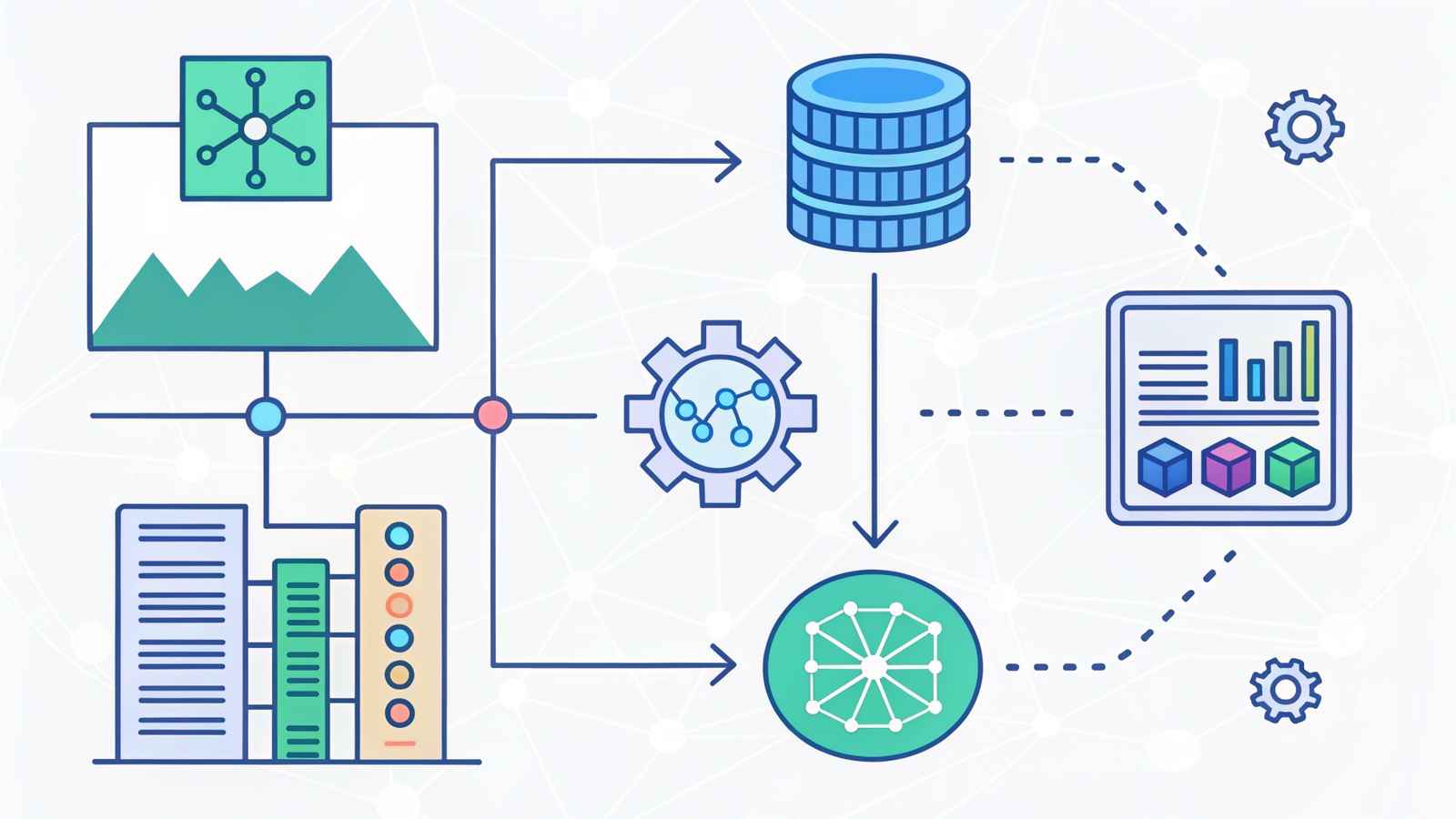
Retrieval Augmented Generation (RAG) is the technology that enables AI chatbots like ChatGPT and Perplexity to search for current, accurate information before generating answers. Unlike traditional AI that relies only on training data, RAG combines real-time information retrieval with AI’s language generation capabilities to deliver more accurate, trustworthy, and up-to-date responses. For businesses in Sri Lanka and globally, understanding RAG is essential because it fundamentally changes how customers discover brands—moving from traditional search engine rankings to becoming a trusted source that AI systems cite and recommend. This guide explains RAG in simple terms, explores its two-step process of retrieval and generation, and reveals why optimizing your digital presence for RAG-powered search is now critical for business visibility in 2025 and beyond.
The way people search for information online has changed dramatically. Instead of typing queries into Google and clicking through multiple links, users now ask AI assistants like ChatGPT, Perplexity, and Google’s AI Overviews for instant, conversational answers. Learn more about how AI search works from question to answer. Behind this transformation lies a powerful technology called Retrieval Augmented Generation—or simply RAG.
If you’re a business owner or marketing manager in Sri Lanka wondering how to stay visible in this new AI-driven landscape, understanding what retrieval augmented generation is and how it works should be your priority. Let’s break it down in plain English.
What is Retrieval Augmented Generation?
Retrieval Augmented Generation (RAG) is a technology that combines two critical capabilities: searching for relevant information from external sources (retrieval) and using AI to create natural, helpful answers (generation). Think of RAG as giving AI assistants the ability to look things up before responding, rather than relying solely on what they learned during training.
Here’s the simplest way to understand it: RAG is like an open-book exam for AI, while traditional AI operates with a closed-book exam approach.
Without RAG (Traditional AI): An AI chatbot answers questions using only information stored in its training data—what it “learned” months or years ago. This approach has serious limitations: the information might be outdated, incomplete, or simply wrong because the AI can’t access current data.
With RAG (Modern AI Search): The AI first searches trusted sources on the internet, retrieves relevant and current information, then uses its language understanding to synthesize that information into a clear, conversational answer. The result? More accurate, timely, and trustworthy responses.
For Sri Lankan businesses wondering why their website traffic patterns are shifting, RAG is a significant part of the answer. When potential customers ask AI assistants about products, services, or solutions in your industry, RAG determines which businesses get mentioned and recommended.
How Does Retrieval Augmented Generation Work?
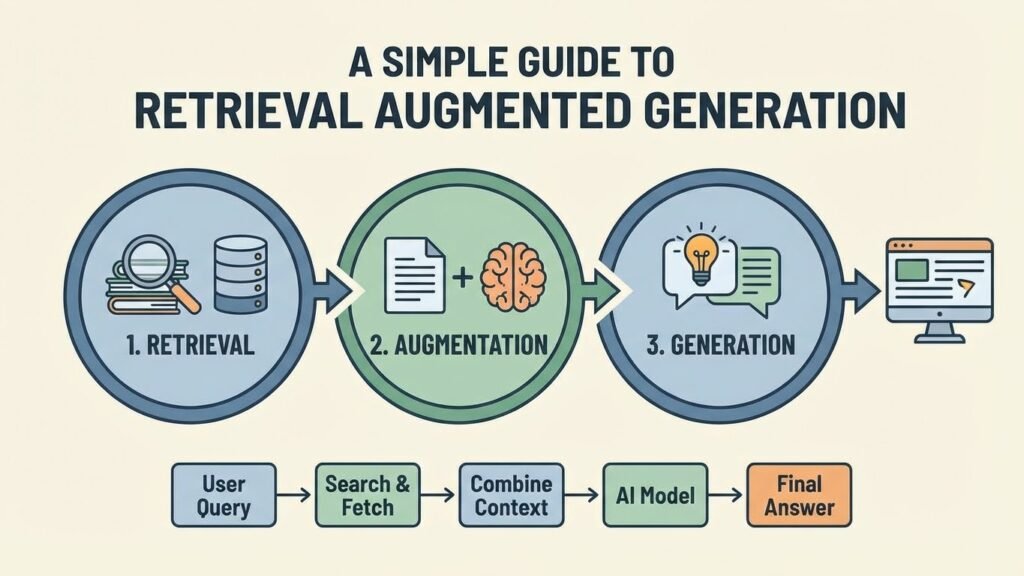
Understanding the RAG process helps clarify why your website’s content structure and authority matter more than ever. The technology works in two distinct steps:
Step 1: Retrieval (The Search Phase)
When you ask an AI assistant a question, RAG doesn’t immediately generate an answer. Instead, it first conducts a search across various sources—websites, databases, documents, and knowledge bases—to find relevant, authoritative information related to your query.
This retrieval process considers multiple factors:
- Relevance: How closely does the content match the user’s question?
- Authority: Is the source credible and trustworthy?
- Recency: Is the information current and up-to-date?
- Structure: Is the content well-organized with clear formatting that AI can parse effectively?
Let’s say someone in Colombo asks ChatGPT: “What are the best digital marketing strategies for small businesses in Sri Lanka?”
During the retrieval phase, RAG searches across multiple websites, identifies content that discusses digital marketing strategies specifically relevant to Sri Lankan small businesses, and pulls the most authoritative, recent information available.
Step 2: Augmentation (The Context Assembly Phase)
After retrieving relevant sources, the system doesn’t immediately generate an answer. First, it augments the user’s original query by assembling the retrieved information into meaningful context.
This augmentation process involves:
- Context Selection: Choosing the most relevant passages from retrieved sources
- Information Synthesis: Combining insights from multiple documents
- Quality Filtering: Removing contradictory or low-quality information
- Context Prioritization: Ranking information by relevance and reliability
In our example, the system would take the retrieved content about digital marketing in Sri Lanka and organize it into structured context: local SEO best practices, popular social media platforms in the region, successful case studies from Sri Lankan businesses, and region-specific customer behavior patterns.
This augmented context—the user’s question plus relevant retrieved information—forms the foundation for the AI’s response. The augmentation phase ensures the AI has comprehensive, accurate information before generating its answer.
Step 3: Generation (The Answer Phase)
With the augmented context in place, the AI now generates a natural, conversational response. It doesn’t simply copy and paste excerpts. Instead, it reads through the assembled information, understands the context, and creates an original response—much like how a knowledgeable consultant would synthesize research findings into clear recommendations.
The generation phase leverages the AI’s core strength: understanding language, recognizing patterns, and communicating complex information in accessible ways. The AI combines facts from multiple sources, maintains consistency, and presents the answer in a format that directly addresses what the user asked.
Continuing our example, ChatGPT would synthesize the augmented information about Sri Lankan digital marketing, then generate a response like: “Small businesses in Sri Lanka can benefit from localized SEO strategies, social media engagement on platforms popular locally such as Facebook and Instagram, and content marketing that addresses specific regional customer needs…”
The key difference from traditional search? Users get one comprehensive, conversational answer instead of ten blue links to click through.
Why Does RAG Matter for Your Business?
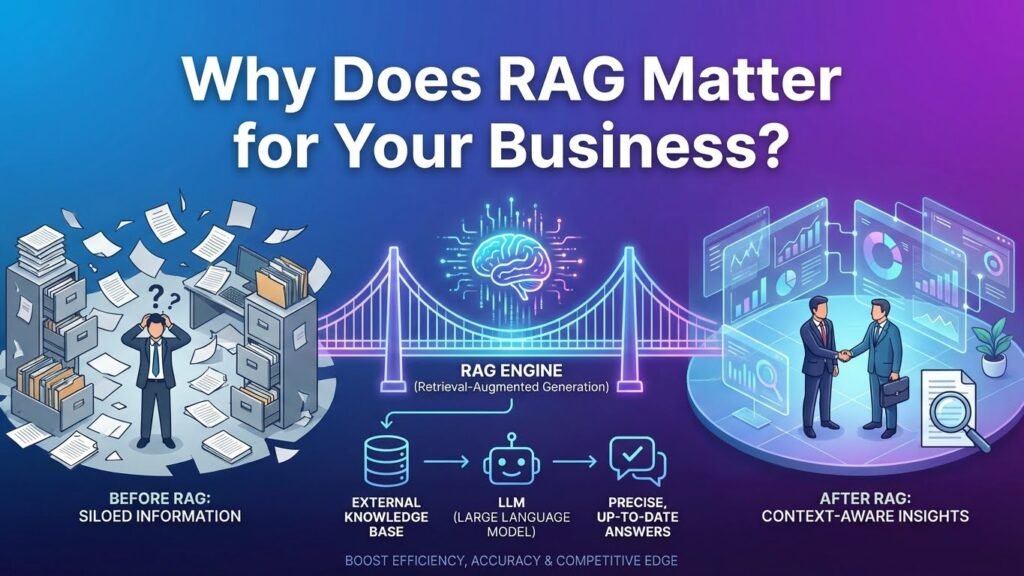
For businesses across Sri Lanka and international markets, RAG represents a fundamental shift in how customers discover and evaluate companies. Traditional SEO focused on ranking high in Google’s search results. AI-powered search through RAG focuses on becoming the source that AI systems trust, retrieve, and cite when answering user questions.
Consider this scenario: A potential client in Kandy searches Google for “SEO agency Sri Lanka” and sees ten results to evaluate. With AI search, that same person might ask ChatGPT or Perplexity: “Which SEO agency in Sri Lanka specializes in AI-powered optimization?” The AI retrieves information, evaluates multiple sources, and potentially recommends one or two agencies by name—including specific details about their services, approach, and expertise.
Being the business that gets cited and recommended in that AI-generated answer is the new competitive advantage. That’s why understanding retrieval augmented generation matters—it’s not just a technical concept; it’s the mechanism determining whether your business appears in the answers AI provides to your potential customers.
The Visibility Challenge
Many Sri Lankan businesses have invested years building strong Google rankings through traditional SEO. That effort remains valuable, but it’s no longer sufficient. RAG-powered AI search introduces new requirements:
- Structured, scannable content that AI systems can easily parse and understand
- Clear authority signals like backlinks, citations, and mentions from credible sources
- Comprehensive, in-depth information rather than keyword-stuffed, shallow content
- Entity optimization that helps AI understand what your business is, what you offer, and who you serve
- Schema markup providing structured data that RAG systems can retrieve efficiently
Research from leading SEO platforms indicates that RAG-based AI systems prioritize content that demonstrates expertise, authority, and trustworthiness—the same principles Google has emphasized but now applied in a retrieval context where AI needs to confidently cite your business as a reliable source.
What is Retrieval Augmented Generation Changing About Search?
The shift from traditional search to RAG-powered AI search changes three fundamental aspects of how people find and evaluate businesses:
-
From Browsing to Direct Answers
Traditional search required users to browse multiple websites, compare information, and piece together their own conclusions. RAG delivers synthesized answers immediately, reducing the number of websites users visit but increasing the importance of being cited within those AI-generated responses.
For local businesses in cities like Negombo, Galle, or Jaffna, this means your visibility now depends partly on whether AI systems retrieve and reference your business when answering relevant queries about your industry, location, or specialization.
-
From Rankings to Citations
Google rankings focused on appearing in positions one through ten. RAG-powered search focuses on being the authoritative source that AI systems cite when generating answers. A business might rank fifth in traditional search but be the only one an AI assistant mentions by name because RAG determined that business had the most authoritative, relevant information for that specific query.
At Rankedge AI, we help Sri Lankan businesses adapt to this citation-based visibility model through comprehensive AI search optimization strategies that go beyond traditional keyword rankings.
-
From Keywords to Context and Entities
Traditional SEO optimized for specific keywords and phrases. RAG understands context, relationships, and entities—meaning it recognizes your business as a distinct entity with specific attributes, services, locations, and expertise areas. This entity-based understanding allows RAG systems to recommend your business even when users don’t use your exact keywords.
How Can Sri Lankan Businesses Optimize for RAG?
Adapting your digital presence for retrieval augmented generation doesn’t require abandoning traditional SEO—it requires expanding your strategy to address how AI systems retrieve and evaluate information.
Create Comprehensive, Authoritative Content
RAG systems favor in-depth content that thoroughly addresses topics from multiple angles. Rather than publishing ten shallow 300-word blog posts, create comprehensive guides that demonstrate genuine expertise. For example, if you’re a restaurant in Colombo, instead of brief menu descriptions, publish detailed articles about Sri Lankan culinary traditions, ingredient sourcing, preparation methods, and dining experiences that establish your authority.
Implement Structured Data and Schema Markup
Schema markup helps RAG systems understand your content’s structure and meaning. When your website clearly identifies what information represents (business name, services, locations, reviews, pricing, contact details), AI systems can retrieve that information more confidently and accurately.
Build Entity Authority Through Mentions and Citations
RAG evaluates source credibility partly through external validation. Earn mentions in reputable publications, industry directories, and relevant websites. For Sri Lankan businesses, this might include local business directories, chamber of commerce listings, industry association websites, and coverage in Sri Lankan news outlets or business publications.
Focus on Natural Language and Question-Answer Formats
Since RAG responds to conversational queries, structure content around the questions your customers actually ask. Create FAQ sections, “How to” guides, and content that directly addresses specific user questions in natural, conversational language.
Maintain Consistency Across Digital Touchpoints
RAG retrieves information from multiple sources. Ensure your business name, address, services, and key information remain consistent across your website, Google Business Profile, social media, and directory listings. Inconsistencies confuse AI systems and reduce your likelihood of being cited confidently.
According to research published by leading AI and search platforms, businesses that optimize for entity recognition and structured content see significantly higher visibility in AI-generated responses compared to those relying solely on traditional keyword optimization.
The Future of Search is Already Here
Retrieval augmented generation isn’t an emerging technology to prepare for—it’s actively shaping how millions of users discover businesses right now. ChatGPT, Perplexity, Google’s AI Overviews, Microsoft Copilot, and other AI-powered search tools collectively handle billions of queries monthly, and that volume continues growing rapidly.
For forward-thinking businesses in Sri Lanka, the opportunity window remains open. While global enterprises scramble to understand and optimize for RAG, local businesses that act now can establish strong AI search visibility before competition intensifies.
The businesses winning in this new landscape aren’t necessarily the largest or most established—they’re the ones that understand how RAG works, what AI systems value when retrieving information, and how to position their digital presence as an authoritative, trustworthy source that AI confidently cites and recommends.
Ready to Optimize Your Business for AI Search in Sri Lanka?
Understanding what retrieval augmented generation is represents just the first step. Implementing effective RAG optimization requires strategic content development, technical implementation, and ongoing adaptation as AI search technology evolves.
At Rankedge AI, we specialize in helping Sri Lankan businesses navigate this transformation through comprehensive AI-powered search optimization services. Our team stays current with the latest developments in RAG technology, entity-based SEO, and AI search visibility strategies that drive real business results.
Whether you’re concerned about declining traditional search traffic, want to establish your business as an authority in AI-generated answers, or need a complete digital presence audit for AI search readiness, we’re here to help.
Contact Rankedge AI today to schedule your complimentary SEO and AI search optimization consultation. Let’s discuss how retrieval augmented generation impacts your specific industry and develop a customized strategy that positions your business for success in the age of AI-powered search.
Frequently Asked Questions About Retrieval Augmented Generation
What is the difference between RAG and traditional AI chatbots?
Traditional AI chatbots generate responses based solely on their training data, which means their knowledge is limited to what they learned during training and can become outdated quickly. Retrieval Augmented Generation (RAG) allows AI systems to search for and retrieve current information from external sources before generating responses, making answers more accurate, timely, and reliable. For businesses, this distinction is crucial—RAG-powered AI can reference your latest products, services, and content, while traditional AI cannot access information published after its training cutoff date.
How does retrieval augmented generation affect SEO for Sri Lankan businesses?
Retrieval augmented generation fundamentally changes SEO by shifting focus from traditional keyword rankings to becoming an authoritative source that AI systems retrieve and cite. Sri Lankan businesses need to optimize for entity recognition, implement structured data markup, create comprehensive authoritative content, and build credibility through external mentions and citations. While traditional SEO practices like quality content and technical optimization remain important, RAG optimization adds new requirements around content structure, authority signals, and natural language formatting that help AI systems confidently retrieve and reference your business.
Can small businesses in Sri Lanka compete with larger companies in RAG-powered search?
Yes, small Sri Lankan businesses often have advantages in RAG-powered search, particularly for local and specialized queries. RAG systems prioritize relevance and authority over company size, meaning a small Negombo-based business with comprehensive, well-structured content about specific local services can outperform larger companies with generic content. The key is establishing clear entity authority in your niche, creating in-depth content that thoroughly addresses customer questions, and building credibility through consistent information across digital platforms. Small businesses that optimize strategically for RAG often achieve stronger AI search visibility than larger competitors who haven’t adapted their approach.
How long does it take to see results from RAG optimization?
RAG optimization typically shows initial results within 2-4 months, though timeline varies based on your current digital presence, industry competition, and implementation depth. Businesses with existing strong content foundations often see faster improvement in AI citations and mentions, while those starting from scratch require more time to build comprehensive content libraries and authority signals. Unlike traditional SEO where rankings can fluctuate dramatically, RAG visibility tends to build progressively as AI systems recognize your business as an increasingly authoritative source. Working with experienced AI SEO specialists like Rankedge AI can accelerate this timeline through strategic implementation and proven optimization methodologies.
Do I need to hire an AI SEO agency in Sri Lanka for RAG optimization?
While some RAG optimization basics can be implemented independently, working with an experienced AI SEO agency in Sri Lanka like Rankedge AI provides significant advantages. RAG optimization requires technical expertise in structured data implementation, deep understanding of how AI systems evaluate and retrieve information, strategic content development that balances traditional and AI search requirements, and ongoing adaptation as RAG technology evolves. Agencies specializing in AI-powered search optimization have tools, experience, and insights that dramatically improve results while avoiding costly mistakes. For most Sri Lankan businesses, partnering with specialists delivers stronger ROI than attempting complex RAG optimization without expert guidance.
About Rankedge
Rankedge is a leading SEO agency in Sri Lanka specializing in AI-powered search optimization, helping businesses across Sri Lanka and international markets adapt to the evolving digital landscape. Our team combines technical SEO expertise with deep understanding of AI search technologies like RAG to deliver measurable results for clients. Contact us to learn how we can help your business thrive in the age of AI-powered search.