
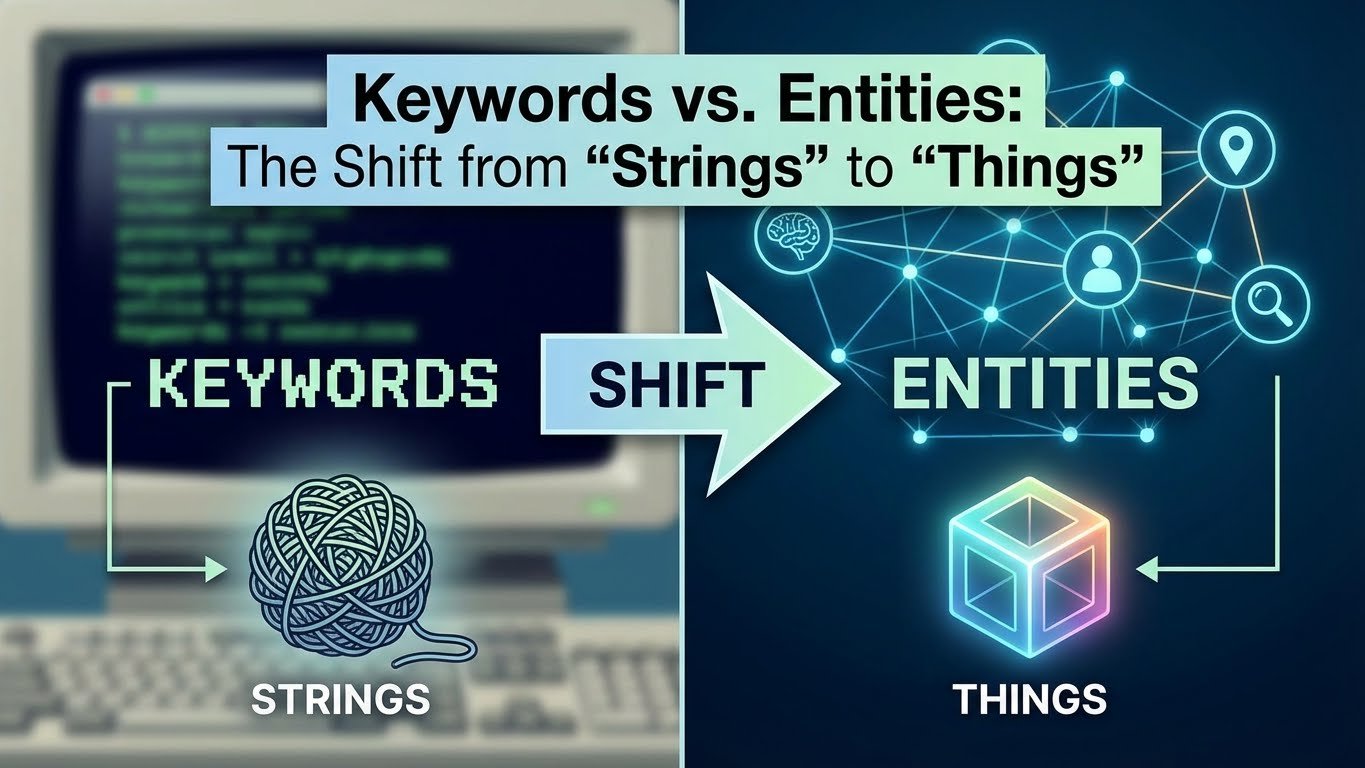
Entity-based SEO represents a paradigm shift from traditional keyword optimization to semantic search understanding . Unlike keywords, which are specific words or phrases, entities are concepts with relationships to other entities that help search engines understand context and meaning . This transformation enables search engines to deliver more accurate, relevant results by comprehending the relationships between concepts rather than just matching text strings . Modern SEO strategies must balance both keyword optimization and entity-based approaches to maximize visibility in an AI-powered search landscape .
Understanding the Fundamentals
Search engine optimization has undergone a dramatic transformation over the past decade . Traditional SEO focused primarily on keyword density and exact-match phrases, but modern search engines like Google now prioritize understanding the actual meaning and context behind queries . This evolution reflects Google’s mission to move from interpreting “strings” (text-based keywords) to understanding “things” (real-world entities and their relationships) .
What Are Keywords in SEO?
Keywords are specific words or phrases that users type into search engines when looking for information . They serve as the foundation of traditional search engine optimization, helping match user queries to relevant web pages . Keywords function as descriptors that signal what content is about, and they remain essential for guiding search engine algorithms to understand page topics .
Key characteristics of keywords include:
- Specific to user search queries and intent
- Focus on exact matches or close variations
- Strategic placement in titles, headings, and meta descriptions
- Volume-based optimization approaches
- Limited contextual understanding beyond the text itself
What Are Entities in Modern SEO?
Entities represent a more sophisticated approach to search optimization . An entity is a distinct concept, person, place, organization, or thing that exists independently and can be clearly defined . Unlike keywords, entities have attributes, relationships, and connections to other entities within a knowledge graph .
For example, “Apple” as a keyword could mean multiple things, but as an entity, search engines understand whether you’re referring to the fruit, Apple Inc., or Apple Records based on the surrounding context and relationships . This semantic understanding allows search engines to deliver more precise results aligned with user intent .
How Do Keywords and Entities Differ?
The fundamental distinction between keywords and entities lies in their approach to search relevance. Keywords describe things, while entities are the things themselves . This shift represents a move from simple text matching to comprehensive semantic understanding.
| Feature | Keywords (“Strings”) | Entities (“Things”) |
|---|---|---|
| Definition | Text phrases users type | Recognized concepts/objects AI understands |
| Search Focus | Exact matches | Meaning, relationships, context |
| Visibility Impact | Basic rankings on text queries | AI understanding, rich results, knowledge panels |
| Best For | Early SEO methods | AI-driven semantic optimization |
| Example | “SEO agency Sri Lanka” | Rankedge AI as an entity with related attributes |
Why Did Search Engines Shift to Entity-Based Search?
Google’s transition from strings to things addresses fundamental limitations in keyword-based search . Traditional keyword matching struggled with ambiguity, context, and user intent . Entity-based search leverages natural language processing (NLP) and knowledge graphs to understand relationships between concepts, delivering more intelligent and relevant results .
This evolution enables search engines to:
- Disambiguate queries with multiple potential meanings
- Connect related concepts across different content pieces
- Provide direct answers through Knowledge Panels and featured snippets
- Understand conversational and voice search queries more effectively
- Deliver personalized results based on semantic understanding
What Are the Benefits of Entity-Based SEO?
Implementing entity-based SEO strategies provides significant advantages beyond traditional keyword optimization . Enhanced visibility in advanced search features like Knowledge Panels, rich snippets, and AI-generated results becomes achievable . Content optimized for entities demonstrates improved contextual relevance, leading to higher rankings for topics rather than isolated keywords .
Additional benefits include:
- Better user experience through comprehensive, contextually relevant content
- Increased authority and trustworthiness signals to search engines
- Improved performance in voice search and conversational queries
- Greater resilience against algorithm updates focused on semantic understanding
- Enhanced visibility in AI-powered search tools like ChatGPT and Perplexity
How Can You Optimize for Entity-Based SEO?
Transitioning to entity-based optimization requires creating comprehensive, contextually rich content . Rather than focusing solely on keyword density, develop content that establishes clear relationships between related concepts and entities . Strategic internal linking with semantic anchor texts helps search engines understand your site’s knowledge structure. The same entity-first logic applies when decisions move from content to execution. Evaluating SEO partners in context helps reduce semantic mismatch and implementation risk.
Practical optimization strategies:
- Create comprehensive content covering main entities and related subtopics thoroughly
- Use structured data markup (Schema.org) to explicitly define entities
- Build strategic internal links that connect related entity pages
- Develop topical authority by covering entity ecosystems comprehensively
- Implement breadcrumb navigation to show hierarchical relationships
- Include relevant entity attributes and relationships in your content
- Focus on E-E-A-T (Experience, Expertise, Authoritativeness, Trustworthiness) signals
For detailed guidance on implementing semantic SEO strategies, explore our comprehensive guide to structured data implementation and advanced internal linking strategies. Understanding how AI is transforming search behavior will also help you stay ahead of emerging trends.
Should You Abandon Keywords Completely?
Keywords remain essential components of effective SEO strategies . The relationship between keywords and entities is complementary rather than competitive . Keywords help search engines identify relevant content initially, while entities provide the semantic context that determines ranking and relevance .
The most effective modern SEO approach integrates both strategies: use keywords to support and describe entities while building comprehensive content that establishes entity relationships and topical authority . Learn more about balancing traditional and modern SEO techniques for optimal results.
Moving Forward with Entity-Based Optimization
The shift from strings to things represents the future of search engine optimization . As AI-powered search continues evolving, entity-based SEO will become increasingly critical for maintaining online visibility . By understanding entities and their relationships, you can create content that resonates with both search engines and human readers .
Start implementing entity-based strategies today by auditing your existing content for entity coverage, building comprehensive topic clusters, and establishing clear semantic relationships across your website . The integration of traditional keyword optimization with entity-based approaches positions your content for success in the evolving digital landscape